
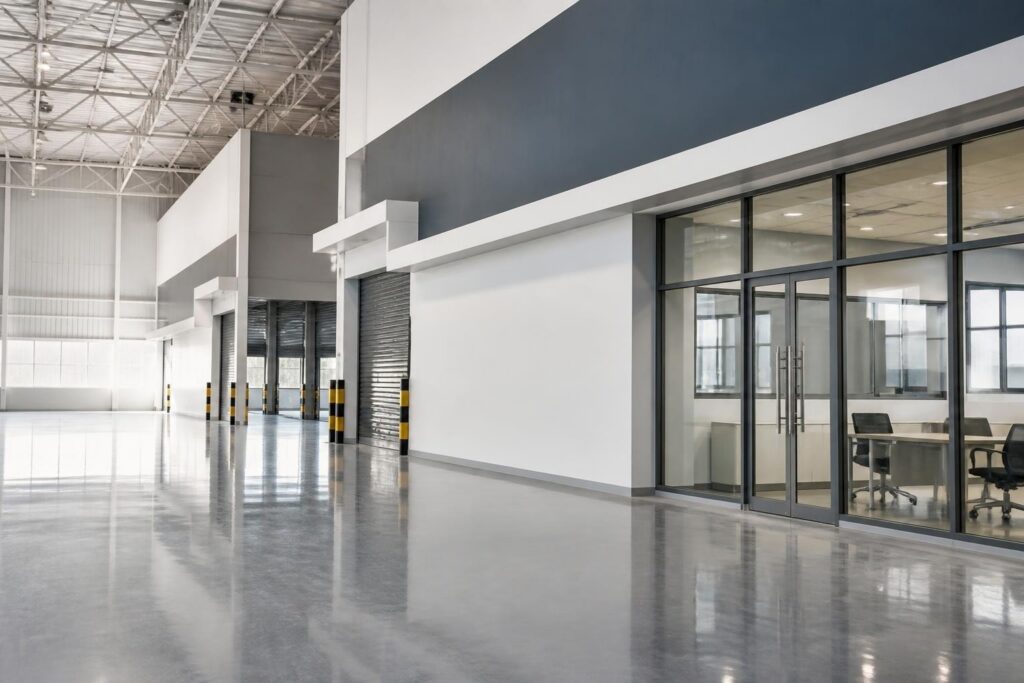
Repainting an office block, retail centre, warehouse or sectional title complex is a very different job from painting a house. The building is usually occupied, the areas are large, work often happens at height, and the finish has to survive Cape Town’s salt air, UV and winter rain for years. This guide explains how commercial painting in Cape Town works, what to check before you appoint a contractor, what drives the price, and how to plan the job so your business keeps running.
What commercial painting in Cape Town covers
Commercial painting is any painting work on a property used for business or shared ownership. In Cape Town, that typically includes:
- Offices and business parks in areas like Century City, Bellville, Tyger Valley and the CBD
- Retail stores and shopping centres, where work is usually done after hours
- Warehouses and factories in Montague Gardens, Paarden Eiland, Epping and Brackenfell, including steel structures, ceilings and roof sheeting
- Sectional title complexes and body corporates, where trustees manage the repaint on behalf of owners
- Schools, churches, clinics and hospitality venues with strict timing and safety needs
The scale is the first big difference. A commercial repaint can run to thousands of square metres of walls, fascias, steelwork and roofs, which is why application method, access equipment and crew size matter as much as the paint itself.

Why Cape Town conditions matter for commercial paint systems
A paint system that lasts a decade inland can fail in a few years on the Cape coast. When you specify a commercial repaint, the contractor should account for:
- Salt air: buildings in Blouberg, Milnerton, Paarden Eiland, Sea Point and along the False Bay coast face constant salt exposure, which attacks steel and breaks down cheaper coatings.
- Intense UV: north and west facing walls fade and chalk faster, so exterior products need good UV resistance.
- The southeaster: strong summer winds carry dust onto wet paint and make spray work harder to control, so masking and scheduling need care.
- Winter rain: cold fronts from May to August drive water into cracks, parapets and flat roofs. Damp walls must be treated before painting, or the new paint will blister. Our guide to damp proofing in Cape Town explains how to spot the cause.
The best months for exterior commercial work are usually the drier stretch from spring to autumn. See our guide on the best time to paint exteriors in Cape Town for the full picture.
How to choose a commercial painting contractor
The lowest quote is rarely the cheapest job. Before you appoint a painting contractor for a commercial property, ask for the following in writing.
| What to ask for | Why it matters |
|---|---|
| COID letter of good standing | Shows the contractor is registered with the Compensation Fund, so injured workers are covered and the liability does not fall on you. |
| Public liability insurance | Covers damage to your building, stock, vehicles or third parties during the work. |
| Health and safety file | The Occupational Health and Safety Act and the Construction Regulations, 2014 require a safety file, risk assessments and a fall protection plan for work at height. |
| Written specification | Lists the surface preparation, primer, product system and number of coats, so quotes can be compared fairly. |
| Workmanship guarantee | Spells out what is covered, for how long, and what maintenance is expected from you. |
| References for similar work | A contractor who paints houses may not have the equipment or crew for a warehouse or a multi-storey block. |
For public sector and some corporate tenders, you may also need the contractor’s CIDB grading and B-BBEE certificate, so check your procurement rules early.

What a proper commercial specification includes
- Surface preparation: high pressure cleaning, scraping loose paint, crack and plaster repairs, rust treatment on steel
- Primers and sealers matched to each substrate, such as bare plaster, galvanised steel, fibre cement or previously painted surfaces
- The paint system by manufacturer and product, with the number of coats
- Access method: ladders, scaffolding, mobile elevating work platforms or rope access
- Working hours, site rules and cleanup
Spray painting versus rolling on commercial projects
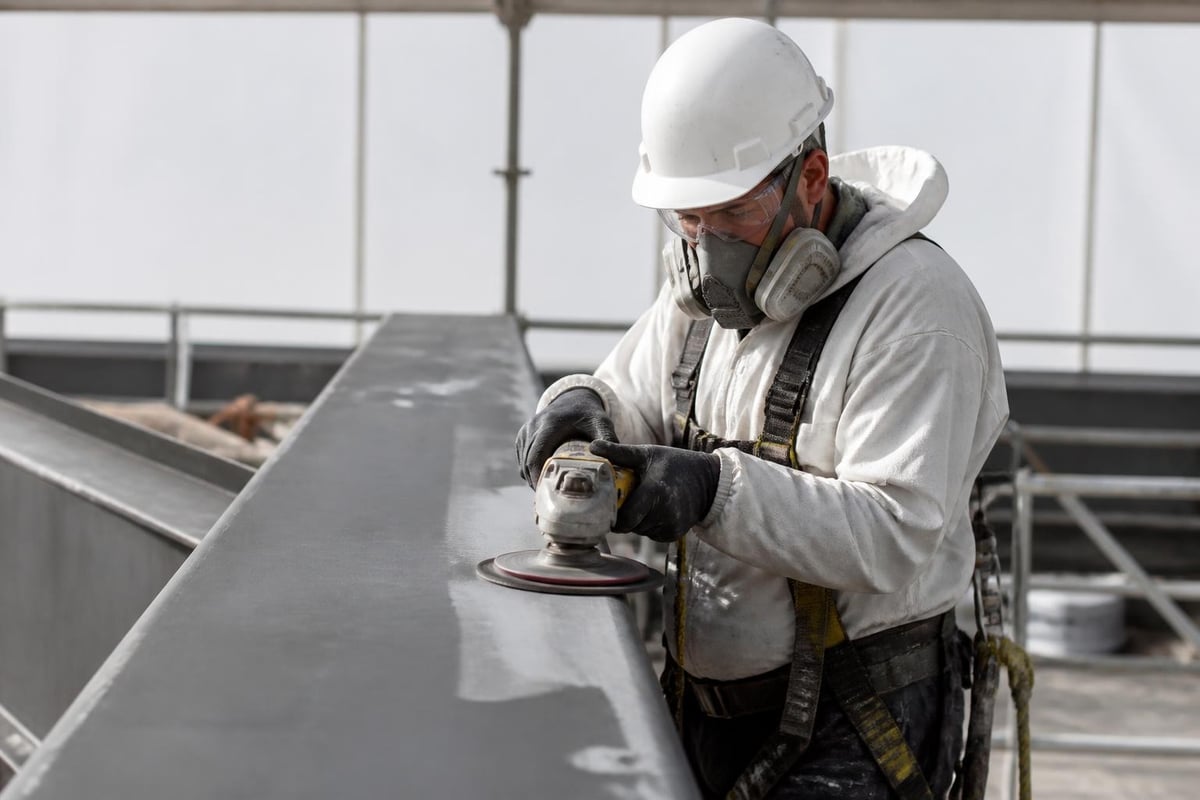
On large or textured surfaces, airless spray application is often the fastest way to get an even, continuous coat. It suits warehouse ceilings, steel structures, palisade fencing, face brick and roofs, and it can cut days off a programme on big areas. The trade off is that spraying needs thorough masking and overspray control, especially in Cape Town wind and near parked cars.
Many commercial jobs use both: spray on the large areas, brush and roller on detailed or sensitive areas. Qualispray specialises in spray painting in Cape Town for exactly these large commercial and industrial surfaces.
What drives the cost of commercial painting in Cape Town
Commercial painting is usually quoted per square metre or as a fixed price for a defined scope. The main cost drivers are:
- Surface area and height: multi-storey work needs scaffolding or aerial platforms, which adds to the cost.
- Condition of the surfaces: cracks, flaking paint, damp and rust all add preparation time.
- The paint system: a coastal grade exterior system, anti-carbonation coating or industrial steel coating costs more than standard acrylic, but lasts much longer.
- Working hours: after hours and weekend work to avoid disrupting trade usually carries a premium.
- Safety requirements: site inductions, safety officers and permits on larger sites are part of the price.
Because product prices and labour rates change, treat any per square metre figure you see online as a rough guide. A written quote after a site inspection is the only number to budget on. For residential benchmarks, see our cost to paint a house in Cape Town guide.
Planning the job around your business
The biggest hidden cost of a commercial repaint is disruption. A good plan keeps staff working and customers coming in:
- Survey and specify: inspect every surface, test for damp and agree the paint system.
- Phase the work: start with exteriors and common areas, then move floor by floor or unit by unit.
- Schedule around trade: retail and hospitality often paint after hours, while factories use the December shutdown.
- Communicate: tell tenants and staff which areas are affected and when.
- Inspect and sign off: walk the site with the contractor before final payment and record any snags.
Painting for body corporates and sectional title complexes
For sectional title schemes, exterior painting is normally part of the scheme’s maintenance, repair and replacement plan. Trustees should get at least two or three comparable quotes on the same specification, check the contractor’s insurance and safety documents, and agree the programme with owners before work starts. A proper repaint combined with waterproofing of parapets, balconies and flat roofs often saves the scheme far more than it costs. Our painting contractors in Cape Town regularly handle full complex repaints.
Specialist surfaces on commercial properties
- Roofs: IBR and corrugated roofs need rust treatment and the right primer before coating. See roof painting and repairs in Cape Town.
- Floors: warehouses, workshops and showrooms benefit from seamless, hard wearing epoxy flooring.
- Steelwork: structural steel, railings and palisades need rust removal and an anti-corrosion primer, especially near the coast.
Keeping the finish looking good
A commercial paint job lasts longer with simple upkeep: wash exterior walls and fascias periodically to remove salt and dirt, inspect the building after each winter, and touch up damaged areas before water gets in. Catching a failing sealant joint or a rust spot early costs far less than a full repaint.
Frequently asked questions
How long does a commercial painting project take?
It depends on the size, access and weather. A small retail unit may take a few days, while a large complex or warehouse can take several weeks. Spray application and good phasing shorten the programme.
Can you paint while our business is open?
Yes. Most commercial work can be phased, done after hours or scheduled over weekends and shutdown periods, so trading continues.
Do you work outside Cape Town?
Qualispray works across Cape Town and the wider Western Cape, including the Northern and Southern Suburbs, the Atlantic Seaboard and the Winelands.
Get a quote for your commercial property
From national retailers like Pick n Pay to offices, factories and sectional title complexes, Qualispray handles commercial painting, spray painting, waterproofing, roofing and epoxy flooring across Cape Town. We provide free site assessments and written quotes with the full specification. Request your free quote or call 021 981 9120.