

Industrial spray paint has revolutionized how commercial properties, warehouses, manufacturing facilities, and infrastructure projects across Cape Town receive protective and decorative coatings. This specialized coating method delivers consistent coverage, exceptional durability, and rapid application speeds that traditional brush-and-roller techniques cannot match. For property owners and facility managers throughout the Western Cape, understanding the capabilities, specifications, and application requirements of industrial-grade spray coatings ensures long-term protection and cost-effective maintenance cycles.
Understanding Industrial Spray Paint Formulations
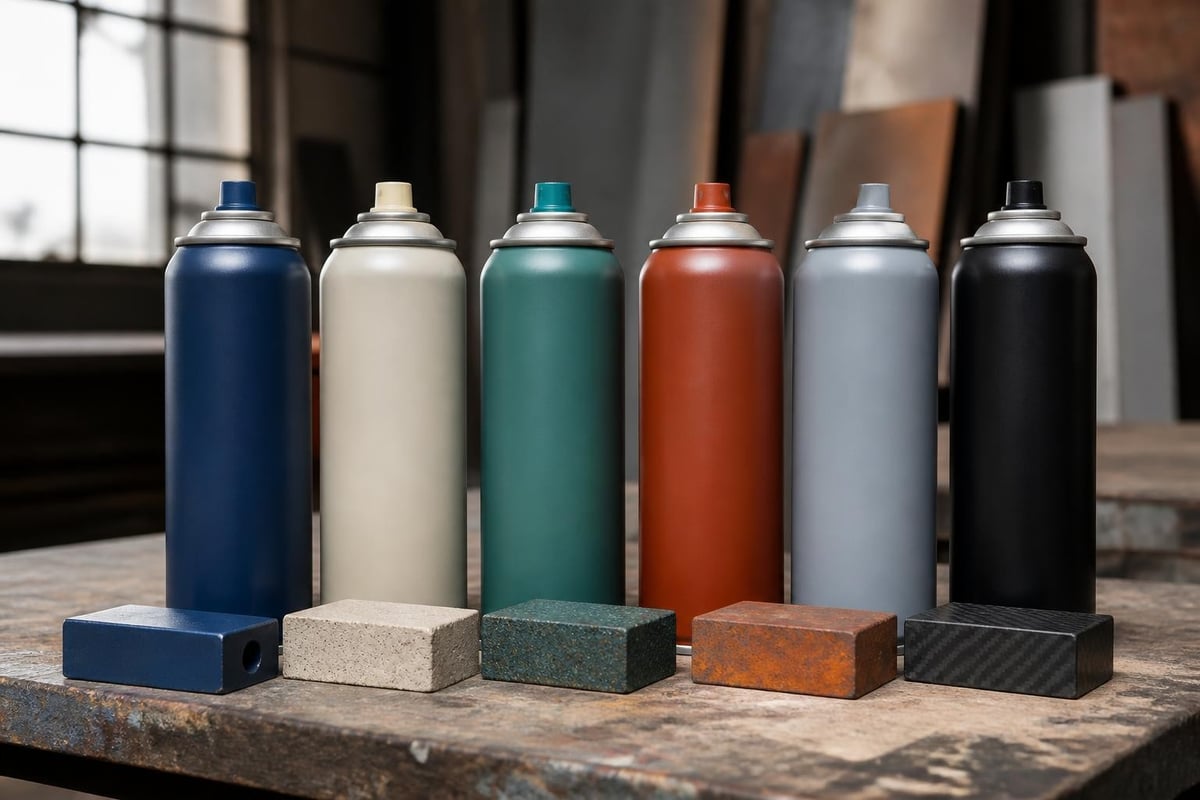
Industrial spray paint differs fundamentally from consumer-grade aerosol products. These formulations undergo rigorous testing to meet performance standards for adhesion, chemical resistance, corrosion protection, and environmental durability.
Chemical Composition and Performance Standards
Modern industrial coatings typically feature epoxy, polyurethane, or acrylic bases engineered for specific substrates and exposure conditions. Epoxy-based formulations provide exceptional adhesion to metal surfaces and outstanding chemical resistance, making them ideal for manufacturing facilities and processing plants throughout Cape Town's industrial corridors.
The formulation chemistry directly impacts performance characteristics:
- Solvent-based systems deliver superior flow and leveling on metal substrates
- Water-based alternatives reduce VOC emissions while maintaining durability
- High-solids formulations minimize environmental impact and accelerate drying times
- Two-component reactive systems provide maximum chemical and abrasion resistance
Performance validation follows established protocols, including adhesion testing methods that quantify coating bond strength. These standardized tests ensure industrial spray paint meets project specifications before and after application.
VOC Compliance and Environmental Regulations
The EPA’s national emission standards for aerosol coatings establish strict limits on volatile organic compounds in spray-paint formulations. These regulations drive continuous innovation in low-VOC and water-based industrial coatings.
Cape Town facilities must balance regulatory compliance with performance requirements. Water-based industrial spray paint now achieves durability metrics comparable to traditional solvent systems while dramatically reducing emissions during application.
| Coating Type | VOC Content (g/L) | Typical Applications | Cure Time |
|---|---|---|---|
| Solvent Epoxy | 340-420 | Heavy industrial, chemical exposure | 16-24 hours |
| Water-Based Acrylic | 50-150 | General commercial, architectural | 2-4 hours |
| High-Solids Polyurethane | 250-340 | Exterior equipment, infrastructure | 8-12 hours |
| Zero-VOC Water-Based | <50 | Interior commercial, occupied spaces | 1-2 hours |
Surface Preparation for Industrial Applications
Proper substrate preparation determines coating performance and service life more than any other factor. Industrial spray paint requires specific surface profiles and cleanliness standards to achieve specification-grade adhesion.
Metal Substrate Preparation
Metal surfaces demand rigorous cleaning and profiling before coating application. The SSPC surface preparation standards define cleaning grades from SP 1 (solvent cleaning) through SP 10 (near-white blast cleaning) based on project requirements.
For structural steel and equipment in Cape Town's coastal environment, near-white metal blast cleaning provides optimal protection against the salt-laden atmosphere. This preparation removes all mill scale, rust, and previous coatings while creating a surface profile that mechanical anchors the industrial spray paint.
Critical preparation steps include:
- Solvent cleaning to remove oils and contaminants
- Abrasive blasting to specified cleanliness grade
- Profile measurement to verify anchor pattern depth
- Dust removal before primer application
- Environmental monitoring for temperature and humidity
Concrete and Masonry Surfaces
Concrete substrates present different challenges. Industrial spray paint applied to warehouse floors, loading docks, and parking structures requires properly cured, dry concrete with appropriate surface porosity.
Professional spray painting services evaluate concrete moisture content, alkalinity, and contamination before recommending coating systems. Surface grinding or shot-blasting creates the mechanical profile necessary for long-term adhesion.
Application Equipment and Techniques
Industrial spray paint application demands professional equipment calibrated for specific coating viscosities and film-build requirements. The equipment selection directly impacts finish quality, material utilization, and project timelines.
Airless Spray Systems
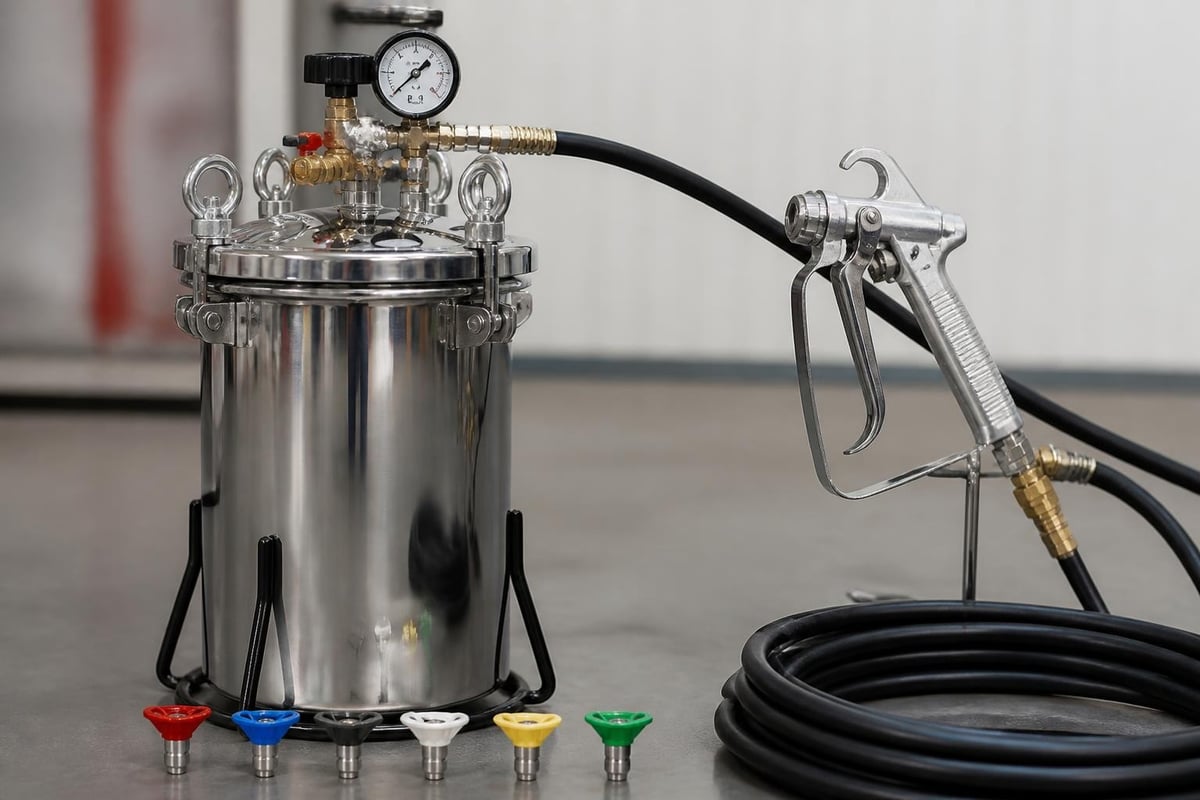
High-pressure airless sprayers dominate industrial coating applications. These systems atomize material through hydraulic pressure, delivering heavy-bodied coatings at high flow rates without compressed air.
Airless equipment advantages for commercial projects:
- Rapid coverage of large surface areas (45-110 m² per hour)
- Consistent film thickness across complex geometries
- Reduced overspray compared to conventional air-atomized systems
- Lower material waste improving cost-effectiveness
Tip selection determines spray pattern width and film build. Industrial applications typically use 0.015 to 0.023-inch orifice tips, with fan angles from 40 to 80 degrees depending on surface configuration.
HVLP and Air-Assisted Systems
High-volume, low-pressure (HVLP) equipment provides superior control for detailed work and finish applications. These systems reduce overspray while delivering fine atomization for smooth, uniform coatings on architectural elements and equipment.
Air-assisted airless technology combines hydraulic atomization with air jets, balancing productivity with finish quality. This hybrid approach suits industrial spray paint applications requiring both speed and appearance standards.
| Equipment Type | Transfer Efficiency | Best Applications | Overspray Level |
|---|---|---|---|
| Conventional Airless | 50-60% | Large structural surfaces | Moderate-High |
| HVLP | 65-85% | Equipment, detailed work | Very Low |
| Air-Assisted Airless | 60-75% | General commercial, mixed projects | Low-Moderate |
| Electrostatic | 75-95% | Metal fabrication, repetitive parts | Minimal |
Quality Control and Testing Protocols
Industrial coatings require systematic inspection and testing to verify specification compliance. Quality control begins before the first coat and continues through final acceptance.
Film Thickness Measurement
Dry film thickness (DFT) directly correlates with coating performance and service life. Electronic gauges measure applied thickness, ensuring industrial spray paint meets minimum specifications without excessive build that wastes material.
Typical industrial specifications require:
- Primer coats: 50-75 microns (2-3 mils)
- Intermediate coats: 75-100 microns (3-4 mils)
- Topcoats: 50-75 microns (2-3 mils)
- Total system: 200-300 microns (8-12 mils)
Measurement frequency follows project specifications, typically 3-5 readings per 100 square meters of coated area.
Adhesion Testing
Pull-off adhesion testers quantify coating bond strength through calibrated hydraulic dollies. This testing method provides objective data on whether industrial spray paint achieves specified adhesion values, typically 1.5 to 3.5 MPa for structural applications.
Field testing identifies adhesion issues before coating failure occurs, allowing corrective action during the maintenance window rather than emergency repairs later.
Durability Factors in Coastal Environments
Cape Town's maritime climate presents unique challenges for industrial coatings. Salt spray, UV exposure, temperature cycling, and humidity fluctuations accelerate coating degradation without proper system selection and application.
Corrosion Protection Strategies
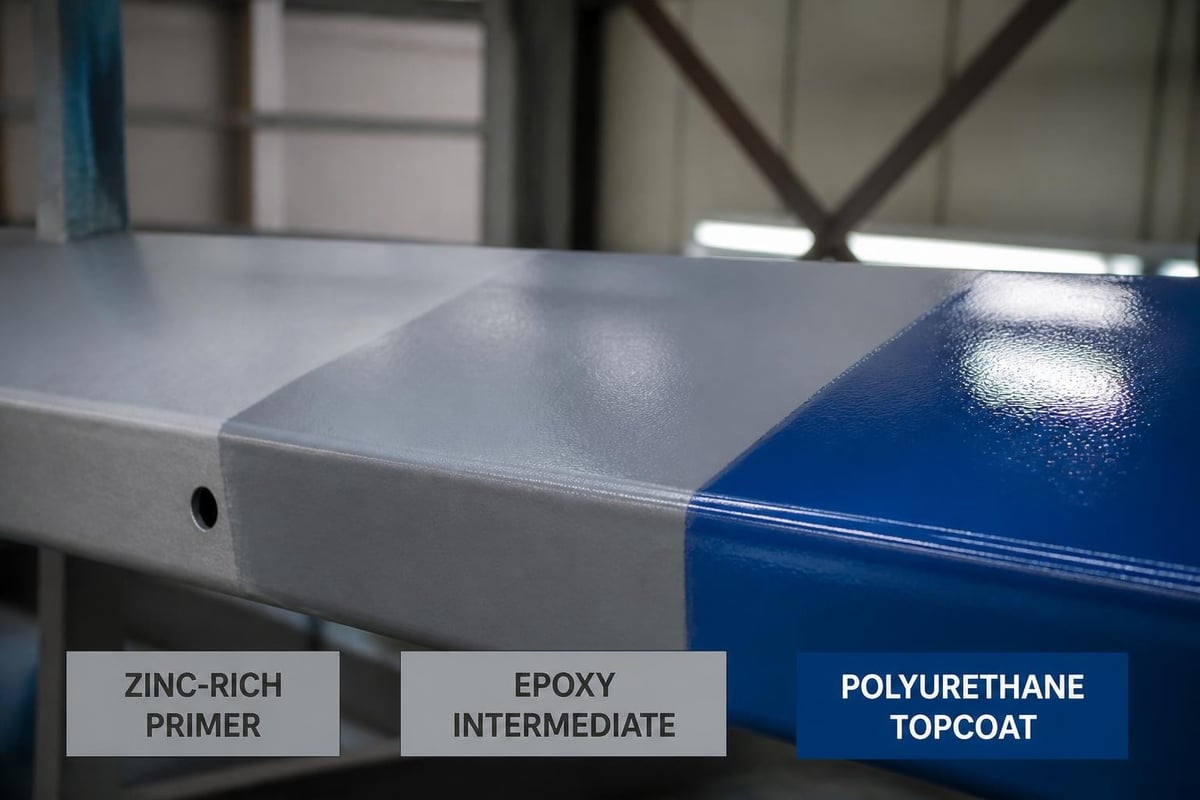
Industrial spray paint systems for coastal exposure incorporate multiple protection mechanisms. Barrier coatings physically separate substrates from corrosive atmospheres, while sacrificial primers provide cathodic protection through zinc-rich formulations.
Three-coat systems deliver optimal protection:
- Zinc-rich epoxy primer (75 microns) provides sacrificial protection
- Epoxy intermediate coat (100 microns) builds barrier thickness
- Polyurethane topcoat (75 microns) resists UV and chemical exposure
This layered approach ensures 15-20 year service life on properly prepared steel structures exposed to marine environments around the Cape Peninsula.
UV Resistance and Colour Stability
Direct sunlight degrades many industrial coatings through photochemical reactions that break polymer chains. Acrylic and polyurethane topcoats incorporate UV stabilizers and absorbers that protect underlying layers while maintaining colour stability.
Colour retention specifications typically require Delta E values below 5.0 after 2000 hours of accelerated weathering, ensuring industrial spray paint maintains appearance standards throughout the Western Cape's intense summer conditions.
Cost Analysis and Project Economics
Industrial spray paint represents a significant capital investment requiring careful economic analysis. Project costs encompass material, labour, surface preparation, access equipment, and environmental controls.
Material Cost Factors
Industrial-grade coatings range from R180 to R650 per litre depending on formulation complexity and performance requirements. Two-component epoxies and polyurethanes command premium pricing but deliver extended service life that justifies initial expense.
Cost drivers include:
- Base resin chemistry and pigment loading
- Performance additives (UV stabilizers, corrosion inhibitors)
- VOC-compliance technology
- Mixing ratios and pot life constraints
- Specialized application requirements
Bulk purchasing for large commercial facilities reduces unit costs by 15-25% compared to small-quantity retail pricing.
Labour and Application Economics
Professional application labour typically represents 40-60% of total project cost. Industrial spray paint application productivity depends on surface complexity, access requirements, and environmental conditions.
| Project Type | Coverage Rate | Labour Cost (per sq m) | Material Cost (per sq m) | Total Cost (per sq m) |
|---|---|---|---|---|
| Warehouse Exterior | 8-12 sq m/hour | R45-65 | R35-50 | R80-115 |
| Structural Steel | 5-8 sq m/hour | R65-95 | R50-75 | R115-170 |
| Equipment/Machinery | 3-5 sq m/hour | R95-140 | R60-90 | R155-230 |
| Complex Piping | 2-4 sq m/hour | R140-210 | R75-110 | R215-320 |
Maintenance Planning and Lifecycle Management
Systematic maintenance extends industrial spray paint service life while preventing catastrophic coating failure. Proactive programs identify early degradation signs and schedule targeted touch-up before complete system replacement becomes necessary.
Inspection Protocols
Annual inspections document coating condition through standardized rating systems. Visual assessment identifies chalking, blistering, cracking, and delamination while non-destructive testing quantifies remaining film thickness.
Inspection frequency increases in harsh exposure zones. Coastal industrial facilities benefit from semi-annual evaluations that catch salt-damage before widespread corrosion develops.
Touch-Up and Spot Repair
Early intervention through spot repair extends coating life by 5-10 years. Industrial spray paint touch-up requires careful surface preparation, feathering into adjacent coatings, and careful colour matching to maintain uniform appearance.
Professional contractors maintain detailed records of original coating specifications, ensuring repair materials achieve chemical compatibility and performance parity with existing systems. For comprehensive commercial painting needs across the Western Cape, experienced providers like Qualispray offer integrated maintenance programs that maximize coating investment returns.
Specialized Applications and Niche Markets
Beyond general structural protection, industrial spray paint serves specialized functions in food processing, pharmaceutical manufacturing, clean rooms, and high-temperature environments.
Food-Grade and Sanitary Coatings
Food processing facilities require NSF/ANSI 61-certified coatings that withstand high-pressure washdowns and chemical sanitizers. Epoxy-phenolic formulations resist acidic foods while providing smooth, easily cleaned surfaces that prevent bacterial harboring.
These specialized industrial spray paint systems cost R450-750 per litre but deliver 8-12 year service life in demanding hygiene environments common in Cape Town's food manufacturing sector.
High-Temperature Applications
Boiler rooms, exhaust systems, and process equipment operating above 200°C require silicone or ceramic-modified coatings. These specialized formulations maintain adhesion and appearance at temperatures that destroy conventional industrial spray paint.
Application techniques differ substantially from standard practices. High-temperature coatings often require multi-stage curing cycles and careful control of film thickness to prevent stress-cracking during thermal cycling.
Industrial spray paint selection, application, and maintenance require specialized knowledge of coating chemistry, surface preparation standards, and environmental exposure factors unique to Cape Town's coastal climate. Professional execution ensures commercial and industrial facilities achieve specification-grade protection that maximizes service life while controlling long-term maintenance costs. When your Western Cape property needs expert coating solutions backed by proven performance, Qualispray delivers professional painting and protective coating services tailored to your facility's specific requirements and budget.
Need Industrial Spray Painting in Cape Town?
Qualispray sprays warehouses, factories, steelwork and plant across Cape Town and the Western Cape. See our industrial spray painting service or request a free site assessment. Call 021 981 9120.